


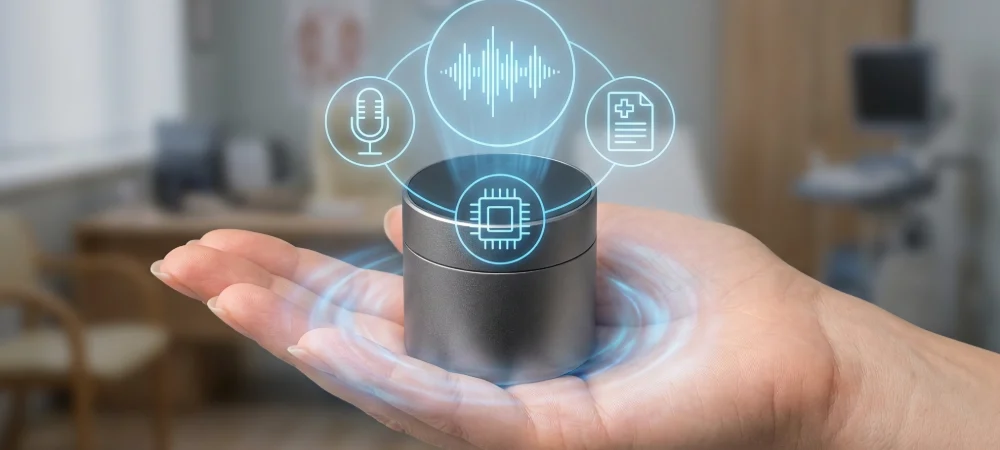
Artera, an agentic company strengthening how healthcare providers communicate and care for patients, has partnered with Signify Research on a new report, ‘Voice AI in Specialty Patient Access: How Specialty Leaders Should Evaluate Solutions, Avoid Pitfalls, and Select the Right Partner’. The report draws on in-depth interviews with speciality group leaders across dermatology, ophthalmology, orthopaedics and multispecialty organisations.
The central finding: a striking number of Voice AI pilots are stalling, not because the technology doesn’t work, but because the criteria used to select vendors were poorly matched to operational reality. The research identifies a ‘demo problem’ at the heart of failed deployments: vendor demonstrations are optimised for clean scenarios and predictable inputs, while live patient access environments introduce noise, emotional complexity, insurance ambiguity and edge cases that demos are not designed to expose.
Other key findings include:
- Four operational challenges are driving Voice AI consideration. This includes volume and capacity constraints, workflow and scheduling complexity, patient readiness and variability and reliability and operational friction. Understanding these considerations is essential for defining evaluation criteria.
- Voice AI doesn’t replace the stack – it layers into it. Practices integrate it alongside existing telephony, EHR scheduling, digital tools and call centres. Evaluations that ignore these integration points are where pilots quietly break down.
- The most successful organisations evaluate rigorously, not faster. They define success criteria before a pilot begins and hold vendors accountable at 90 days, six months and twelve months.
- A measurement gap puts ROI at risk. Many smaller practices don’t formally track call abandonment or time-to-schedule, even when they name responsiveness as a top concern. Organisations that can’t baseline their current performance can’t prove improvement later.
- EHR integration claims vary widely. Many vendors claim EHR capabilities that amount to API access, not real-time scheduling writeback – a gap that only surfaces after deployment.
Five steps to evaluate voice AI for operational reality
To help speciality leaders separate vendors who demo well from those who deliver in production, the report introduces a practical five-step evaluation framework and a vendor evaluation checklist derived directly from the research:
- Define the use case explicitly.
- Assess vendor capabilities against seven operational dimensions.
- Validate through a controlled pilot measured against your own baseline.
- Apply the ROI Credibility Ladder – define success at 90 days, six months and 12 months before deployment begins.
- Verify EHR integration depth under live conditions, not just API availability.
The report also identifies seven dimensions a high-performing Voice AI access model must deliver – from scheduling integrity at scale to adoption durability – and finds that few vendors can demonstrate all seven in live operations.
“Most solutions look identical on the surface, and the real differences only become visible after go-live,” said Vlad Kozynchenko, Senior Market Analyst at Signify Research. “This research gives specialty leaders a consistent set of criteria to separate vendors who demo well from those who can demonstrate attributable, defensible performance in production.”
From framework to execution: Artera’s AI Services Model
Artera commissioned this independent, third-party research to give speciality leaders a trusted resource for evaluating Voice AI vendors, whether they ultimately choose Artera.
“Patient access in specialty care isn’t one workflow, it’s hundreds,” said Guillaume de Zwirek, Co-founder and CEO of Artera. “This research confirms what we’ve built our AI Services model around – every practice has different scheduling complexity, different EHR workflows, different patient populations. You need a partner who builds AI with you, proves performance at every stage and holds up long after the demo is over.”
Artera’s AI Services model is purpose-built to address the challenges the research identifies. Rather than offering a one-size-fits-all Voice AI product, Artera’s AI Service Squads work directly with speciality practices to custom-build solutions around their specific scheduling logic, EHR environment, escalation requirements and patient demographics and continue optimising after go-live. Backed by more than a decade of healthcare communication experience and deep EHR integrations, Artera is built to deliver across the full evaluation framework the report outlines: from scheduling integrity and clinical safety to defensible ROI and sustained performance at scale.
For speciality leaders, the goal is adoption that holds up
The organisations that succeed with Voice AI won’t be the fastest movers – they’ll be the most rigorous evaluators. This report gives speciality leaders the criteria, questions and proof gates to hold any vendor accountable at 90 days, six months and 12 months – before a single dollar is committed to production.
