


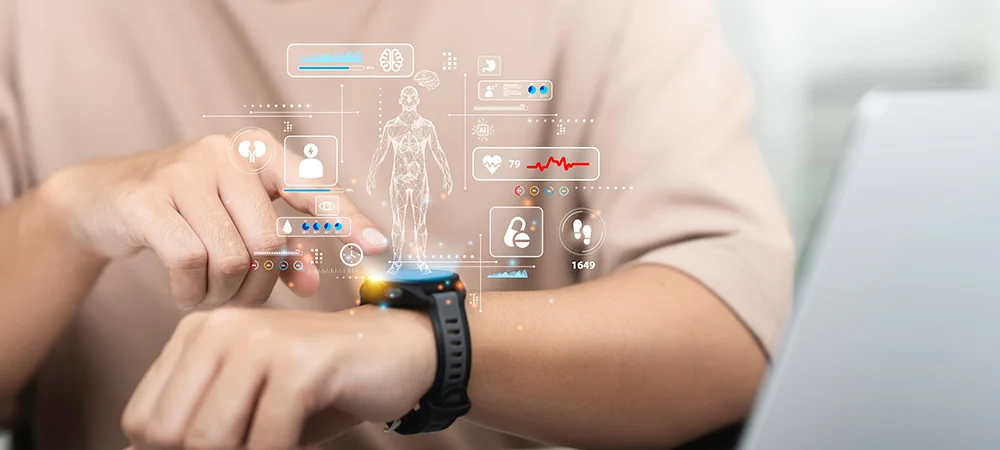
San Francisco-based start-up, Neurologyca, has launched a new Artificial Intelligence platform designed to interpret emotional states in real-time – aiming to push wellness technology beyond its traditional focus on fitness metrics.
The new ‘Human Context’ AI relies on multimodal signal capture, a process that tracks micro-facial expressions, vocal tone, posture, blink rate and speech patterns. These subtle cues are analysed by Machine Learning models that interpret them in context, allowing the system to adapt to a user’s mood, intent and goals as they shift throughout the day.
Most wellness tools still depend on users to log or self-report how they feel. Others lean on data from wearables that track step count, heart rate or sleep duration. While valuable, these inputs can be misleading. A raised pulse may reflect anxiety, but it could also signal excitement after a workout or a burst of motivation. Neurologyca argues that Human Context AI closes this gap by pairing emotional signals with physical health data, creating a more accurate picture of overall wellbeing.
“Physical and mental health are inseparable,” said Juan Graña, Chief Executive, Neurologyca. “Our technology combines multimodal signal analysis with contextual understanding, enabling devices, applications and AI assistants to adapt interactions in real time based on how someone is actually feeling.”
A key feature of the platform is its ability to build long-term behavioural baselines. By monitoring individual patterns over weeks or months, it can detect the early warning signs of burnout, persistent stress or cognitive fatigue. This predictive capability makes interventions more personalised and actionable than the one-size-fits-all advice offered by most wellness apps.
Neurologyca says the system has already been tested in clinical research, providing emotional and cognitive data for projects focused on stroke recovery, ADHD and neurodivergent conditions. The company sees potential far beyond healthcare, pointing to applications in consumer wellness, adaptive learning, enterprise collaboration and emotionally aware AI assistants.
Privacy is central to the platform’s design. All data processing takes place locally on the user’s device rather than in the cloud. Neurologyca argues this ensures sensitive biometric information is not stored or transmitted without consent – while also reducing latency and limiting reliance on external servers.
The system is built to be lightweight and widely accessible. It requires no specialised hardware and functions with the cameras and microphones already present on smartphones and laptops. For users who want richer insights, the platform can also integrate with wearable devices. Its open architecture is intended to make it easy for developers to embed into existing or future products.
Early access for developers will open in the coming months, accompanied by a reference app designed to demonstrate the technology’s capabilities.
Neurologyca positions Human Context AI as the next step in Digital Transformation for wellness technology – moving beyond what Graña called the limitations of ‘step count thinking’ and toward a future where devices understand not just what people do, but how they feel.
